Custom vs Off-the-Shelf Software: What Growing Businesses Should Choose

 1st April, 2026
 6 min read


Table Of Contents
- Introduction
- Why AI Literacy Is Becoming a Core Business Skill
- The Real Power of Strategic Thinking in a Noisy Digital World
- Moving Beyond Data Collection to Data Interpretation
- Personal Branding Is the New Resume
- Adaptability: The Skill That Keeps You Relevant
- The Growing Importance of Human Skills in a Tech-Driven World
- Collaboration Is the New Competitive Advantage
- Execution: Turning Knowledge Into Results
- Building a Future-Ready Mindset
- Conclusion
Introduction
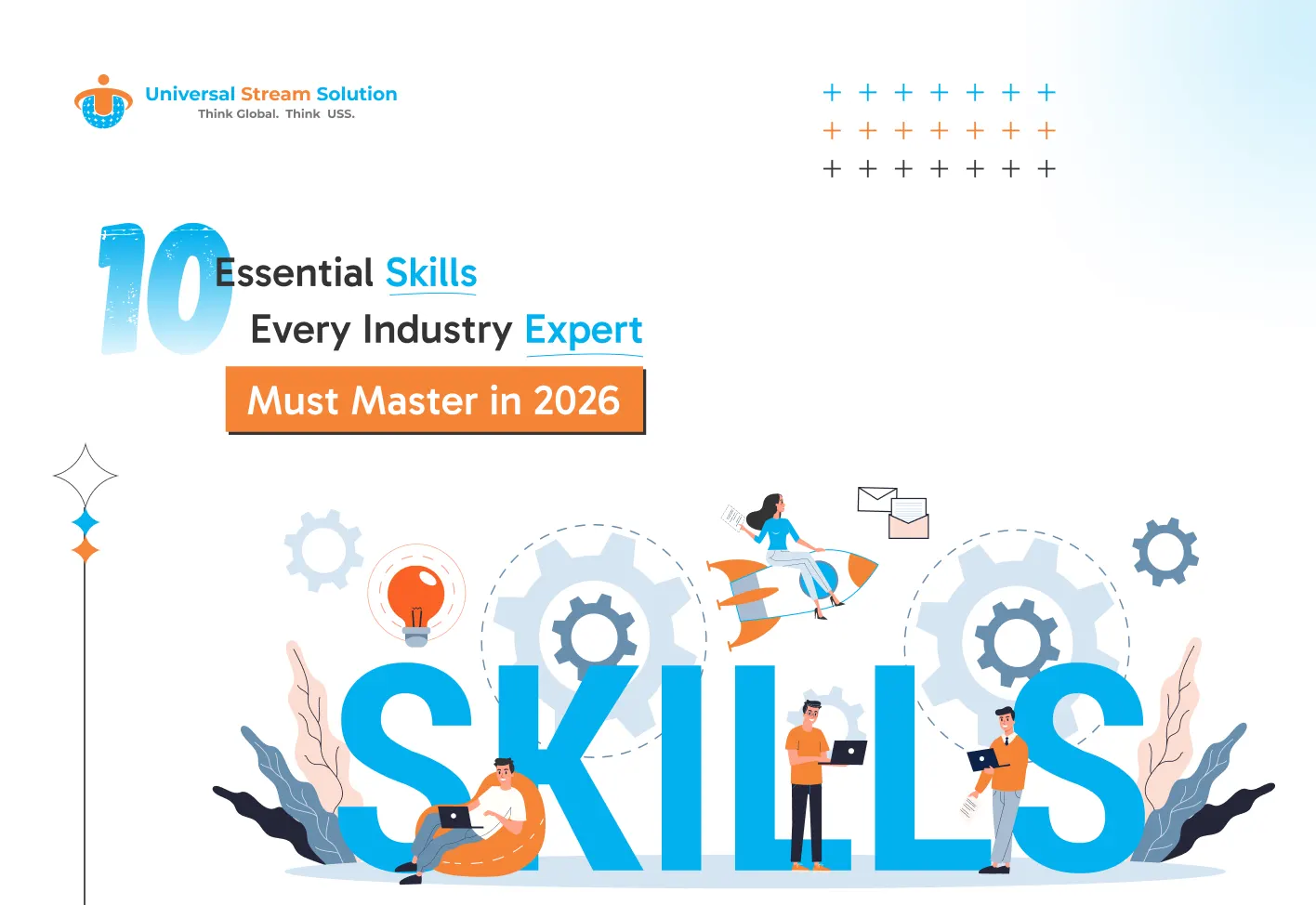
The expectations from industry experts have shifted dramatically over the past few years. Earlier, deep knowledge in a single domain was enough to establish authority. Today, however, expertise is judged by how well you can integrate knowledge, technology, and strategy to create real-world impact. In 2026, professionals are not just expected to “know” things—they are expected to apply, adapt, and scale their knowledge in dynamic environments.
This shift is largely driven by the rise of AI, global digital transformation, and evolving consumer behavior. Businesses are no longer looking for specialists who work in isolation; they want professionals who can think holistically, collaborate effectively, and drive measurable outcomes. This is why building a multi-dimensional skillset is no longer optional—it’s a necessity.
1. Why AI Literacy Is Becoming a Core Business Skill
AI is transforming how decisions are made, how content is created, and how businesses operate. But beyond tools and automation, what truly differentiates an expert is their ability to use AI strategically rather than blindly. In 2026, professionals who understand how to guide AI tools with clear instructions, refine outputs, and integrate them into workflows will outperform those who simply “use AI casually.”
AI literacy also involves understanding where human judgment is still critical. For instance, while AI can generate reports or content, it lacks contextual awareness, emotional nuance, and business intuition. Experts who combine AI efficiency with human insight will create more accurate, relevant, and impactful outcomes.
2. The Real Power of Strategic Thinking in a Noisy Digital World
With information overload becoming the norm, strategic thinking has become one of the most underrated yet powerful skills. It’s easy to get lost in tactics—posting content daily, running ads, or implementing tools—but without a clear strategy, these efforts often fail to deliver meaningful results.
An industry expert in 2026 must be able to step back and ask the right questions:
- What problem are we solving?
- Is this aligned with long-term business goals?
- What are the risks and opportunities?
Strategic thinking allows professionals to prioritize effectively, allocate resources wisely, and focus on initiatives that drive real growth rather than vanity metrics.
3. Moving Beyond Data Collection to Data Interpretation
Many professionals today have access to data, but very few truly understand how to interpret it—making this one of the most critical skills required for IT jobs in 2026. The real advantage no longer lies in simply having data, but in making sense of it quickly and accurately to drive meaningful outcomes.
Industry experts must develop the ability to connect data points with business results. For example, instead of just tracking website traffic, professionals should analyze user behavior, conversion patterns, and drop-off points to uncover actionable opportunities. This shift from basic reporting to deep insight generation is what defines the skills required for IT jobs in 2026 and separates average performers from high-impact decision-makers.
4. Personal Branding Is the New Resume
In a digital-first world, your online presence speaks before you do. Whether someone is hiring, collaborating, or evaluating your expertise—especially in a scalable software development company environment—they will likely check your digital footprint first. This makes personal branding a critical skill for professionals in 2026.
But personal branding is not just about posting content—it’s about positioning yourself with clarity and consistency. Whether you're working in or representing a scalable software development company, you need to clearly communicate what you stand for, the problems you solve, and the value you bring to the table. What do you stand for? What problems do you solve? What insights can you offer?
Experts who share valuable perspectives, real experiences, and actionable knowledge consistently build trust and credibility over time. This not only opens doors to opportunities but also strengthens their authority within their industry, especially for professionals associated with a scalable software development company aiming to build long-term digital credibility.
5. Adaptability: The Skill That Keeps You Relevant
If there’s one skill that ensures long-term success, it’s adaptability. The pace of change in technology, business models, and market demands means that what works today may become obsolete tomorrow.
Professionals who resist change often find themselves struggling to keep up, while those who embrace learning stay ahead. Adaptability is not just about learning new tools—it’s about being open to new ways of thinking, experimenting with new approaches, and evolving your mindset.
In 2026, the most successful experts will not be the ones who know everything, but the ones who are willing to learn anything.
6. The Growing Importance of Human Skills in a Tech-Driven World
While technology is advancing rapidly, human skills are becoming even more valuable. Emotional intelligence, communication, and empathy are now essential for leadership, collaboration, and client relationships.
In high-stakes business environments, decisions are not made purely on logic—they are influenced by trust, relationships, and understanding. Experts who can communicate ideas clearly, handle conflicts effectively, and build strong professional relationships will always have an edge.
This balance between technical expertise and human understanding is what defines a truly well-rounded professional.
7. Collaboration Is the New Competitive Advantage
No major success today happens in isolation. Whether it’s launching a product, running a campaign, or scaling a business, collaboration across teams is essential.
In 2026, industry experts must be comfortable working with people from different backgrounds, skill sets, and perspectives. This requires not only communication skills but also the ability to align everyone toward a common goal.
Cross-functional collaboration leads to better ideas, faster execution, and more innovative solutions. Experts who can bridge gaps between teams—such as marketing and tech or sales and operations—become invaluable assets to any organization.
8. Execution: Turning Knowledge Into Results
Knowledge without execution has no value. One of the biggest gaps in today’s professional world is the ability to turn ideas into action.
Industry experts must develop a strong execution mindset—setting clear goals, taking ownership, and consistently delivering results. This includes tracking performance, identifying what’s working, and optimizing strategies accordingly.
In a competitive landscape, those who execute effectively will always outperform those who only plan or analyze.
9. Building a Future-Ready Mindset
Ultimately, success in 2026 is not just about skills—it’s about mindset. A future-ready professional is someone who is curious, proactive, and resilient. They don’t wait for change to happen; they anticipate it and prepare for it.
This mindset allows experts to stay ahead of trends, identify opportunities early, and navigate challenges with confidence. It also encourages continuous improvement, which is essential in a world where standing still means falling behind.
10. Conclusion
The concept of being an “industry expert” is no longer static. It’s dynamic, evolving, and deeply connected to how well you can adapt to change, leverage technology, and deliver meaningful results.
In 2026, expertise will be defined by a combination of AI understanding, strategic thinking, data intelligence, communication skills, and execution ability. Professionals who invest in these areas will not only stay relevant but also lead their industries.
The future belongs to those who are not just skilled—but continuously evolving.

Bharat Katariya

Bharat Katariya is a seasoned executive at Universal Stream Solution LLC, bringing a strong track record of leadership and commercial strategy. With robust experience in driving business growth and operational transformation, he empowers organizations to build scalable, efficient solutions. Bharat is committed to delivering strategic value through innovation, collaboration, and integrity.
Related Blogs



 +91 9638225549
 sales@universalstreamsolution.com


