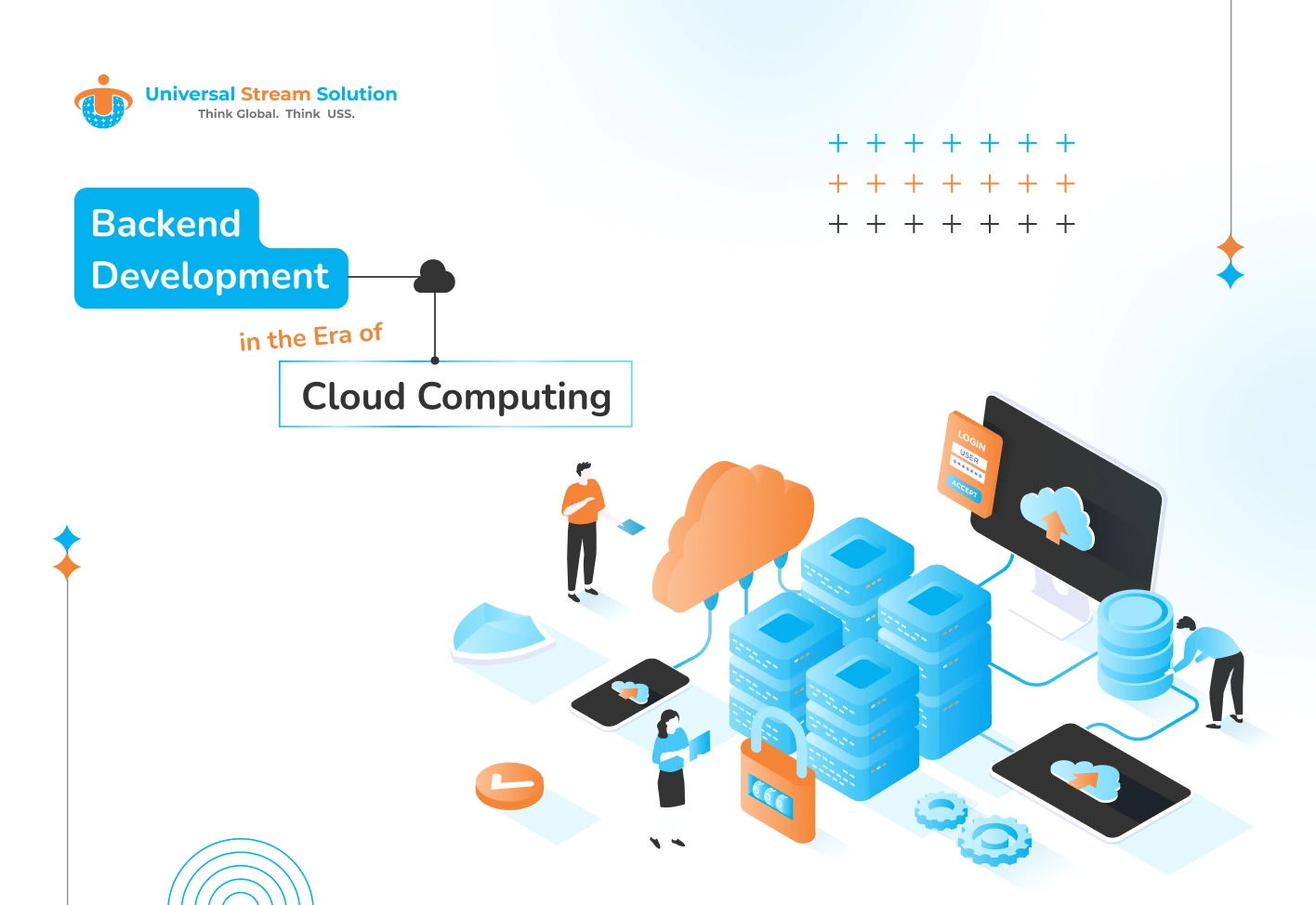
Backend Development in the Era of Cloud Computing

 28th January, 2026
 6 min read


Table Of Contents
- Introduction
- What Is Backend Development?
- Core Cloud Service Models
- Evolution of Backend Architecture in the Cloud Era
- Serverless Architecture
- Key Backend Technologies in Cloud Computing Programming Languages
- Benefits of Cloud-Based Backend Development
- Security in Cloud-Based Backend Development
- DevOps and Backend Development in the Cloud
- Challenges of Backend Development in the Cloud Era
- Best Practices for Cloud-Based Backend Development
- Future Trends in Backend Development and Cloud Computing
- Conclusion
Introduction
Backend development has undergone a massive transformation in the last decade, and cloud computing has been the biggest driving force behind this change. Earlier, backend systems were tightly coupled with physical servers, limited infrastructure, and rigid deployment processes. Today, cloud computing enables developers to build scalable, resilient, and high-performing backend architectures that can support millions of users across the globe.
In the era of cloud computing, backend development is no longer just about writing server-side logic. It involves designing distributed systems, managing cloud resources, ensuring security, optimizing performance, and supporting continuous deployment. This shift has redefined how businesses approach software development and how developers think about backend architecture.
This article explores backend development in the era of cloud computing, covering core concepts, technologies, benefits, challenges, best practices, and future trends—all from an SEO-friendly and industry-relevant perspective.
1. What Is Backend Development?
Backend development refers to the server-side of an application that handles business logic, database interactions, authentication, APIs, and system integrations. It ensures that the frontend (user interface) functions smoothly by processing requests, managing data, and enforcing rules.
Key responsibilities of backend development include:
- Server-side logic and application workflows
- Database design and data management
- API development and integration
- Authentication and authorization
- Performance optimization and scalability
- Security and data protection
With cloud computing, these responsibilities are now deeply connected with cloud infrastructure, platforms, and services.
Understanding Cloud Computing in Backend Development
Cloud computing refers to the delivery of computing resources—servers, storage, databases, networking, and software—over the internet. Instead of maintaining on-premises servers, developers rely on cloud service providers to host and manage scalable backend systems, web applications, APIs, and databases. This approach enables modern web development services such as custom website development, full-stack development, SaaS application development, cloud hosting, DevOps integration, and secure web deployment, ensuring high performance, flexibility, and cost efficiency.
2. Core Cloud Service Models
Infrastructure as a Service (IaaS)
IaaS provides virtualized computing resources such as virtual machines, storage, and networks. Backend developers have full control over the operating system and application stack.
Example use cases:
- Custom backend environments
- Legacy application migration
- High-control infrastructure setups
Platform as a Service (PaaS)
PaaS offers a managed platform where developers focus only on writing backend code, while the cloud provider handles servers, runtime, scaling, and maintenance.
Example use cases:
- Rapid application development
- Microservices deployment
- Reduced DevOps complexity
Software as a Service (SaaS)
SaaS delivers fully functional software over the cloud. Backend developers often integrate with SaaS tools using APIs.
Example use cases:
- Authentication services
- Payment gateways
- Analytics platforms
3. Evolution of Backend Architecture in the Cloud Era
From Monolithic to Microservices
Traditional monolithic backend architectures bundled all functionalities into a single codebase. While simple to develop initially, monoliths became difficult to scale and maintain.
Cloud computing popularized microservices architecture, where backend systems are divided into small, independent services. Each service performs a specific function and communicates via APIs.
Benefits of microservices:
- Independent scaling
- Faster deployments
- Better fault isolation
- Technology flexibility
4. Serverless Architecture
Serverless backend development allows developers to run backend logic without managing servers. Cloud providers automatically scale resources based on demand.
Key advantages:
- Lower operational cost
- Automatic scaling
- Faster time-to-market
Serverless functions are ideal for event-driven backend tasks such as file processing, notifications, and API endpoints.
5. Key Backend Technologies in Cloud Computing Programming Languages
Backend development in the cloud supports a wide range of languages, including:
- JavaScript (Node.js)
- Python
- Java
- Go
- PHP
- Ruby
These languages integrate seamlessly with cloud services and support scalable application development.
Databases in the Cloud
Cloud computing offers both relational and non-relational databases.
Relational Databases
- Structured data
- ACID compliance
- Ideal for transactional systems
NoSQL Databases
- Flexible schema
- Horizontal scalability
- Ideal for big data and real-time applications
Backend developers choose databases based on performance, scalability, and application requirements.
APIs and Backend Services
APIs are the backbone of modern backend development. RESTful APIs and GraphQL are commonly used to enable communication between frontend applications, mobile apps, and third-party services.
6. Benefits of Cloud-Based Backend Development
Scalability
Cloud platforms allow backend systems to scale automatically based on traffic. Developers no longer need to predict peak loads in advance.
Cost Efficiency
Pay-as-you-go pricing models reduce infrastructure costs. Businesses only pay for the resources they use.
Faster Development and Deployment
Cloud tools support CI/CD pipelines, enabling faster releases and continuous improvement.
High Availability and Reliability
Cloud providers offer built-in redundancy, backups, and disaster recovery solutions.
Global Reach
Backend services can be deployed across multiple regions, ensuring low latency and better user experience worldwide.
7. Security in Cloud-Based Backend Development
Security is a top priority in cloud backend systems. While cloud providers manage infrastructure security, backend developers are responsible for application-level security.
Key Security Practices
- Secure authentication and authorization
- Data encryption at rest and in transit
- Role-based access control
- Secure API endpoints
- Regular vulnerability assessments
Adopting a shared responsibility model ensures that both developers and cloud providers work together to maintain security.
8. DevOps and Backend Development in the Cloud
DevOps plays a critical role in cloud-based backend development. It bridges the gap between development and operations, enabling faster and more reliable deployments.
DevOps Practices for Backend Development
- Continuous Integration and Continuous Deployment (CI/CD)
- Infrastructure as Code (IaC)
- Automated testing
- Monitoring and logging
These practices help backend systems remain stable, scalable, and maintainable.
9. Challenges of Backend Development in the Cloud Era
Complexity of Distributed Systems
Managing microservices and distributed architectures requires advanced design and monitoring.
Vendor Lock-In
Relying heavily on a single cloud provider can make migration difficult.
Performance Optimization
Improper cloud configuration can lead to latency and higher costs.
Security Misconfigurations
Misconfigured cloud resources are a common cause of data breaches.
Addressing these challenges requires proper planning, architecture design, and ongoing optimization.
10. Best Practices for Cloud-Based Backend Development
- Design scalable and modular architectures
- Use managed cloud services when possible
- Implement strong security measures
- Optimize costs through monitoring and resource management
- Adopt DevOps and automation tools
- Document APIs and backend workflows
Following best practices ensures long-term success and maintainability.
11. Future Trends in Backend Development and Cloud Computing
AI-Driven Backend Systems
AI and machine learning will automate backend optimization, monitoring, and security.
Edge Computing
Backend logic will move closer to users, reducing latency and improving performance.
Multi-Cloud Strategies
Organizations will adopt multiple cloud providers to avoid vendor lock-in.
Increased Use of Serverless
Serverless architectures will continue to grow due to their cost and scalability benefits.
Conclusion
Backend development in the era of cloud computing has evolved into a dynamic and strategic discipline. Cloud platforms have redefined how backend systems are built, deployed, and scaled, offering unparalleled flexibility and performance.
By embracing cloud-native architectures, microservices, serverless computing, and DevOps practices, backend developers can create resilient and future-ready applications. At , we leverage these modern backend strategies to build scalable, secure, and high-performing solutions tailored to real-world business needs.
As cloud technologies continue to advance, backend development will play a crucial role in driving digital innovation and sustainable growth. Organizations that explore our expertise and approach to modern backend development gain a competitive edge in today’s fast-paced digital ecosystem.

Bharat Katariya

Bharat Katariya is a seasoned executive at Universal Stream Solution LLC, bringing a strong track record of leadership and commercial strategy. With robust experience in driving business growth and operational transformation, he empowers organizations to build scalable, efficient solutions. Bharat is committed to delivering strategic value through innovation, collaboration, and integrity.
Related Blogs



 +91 9638225549
 sales@universalstreamsolution.com


