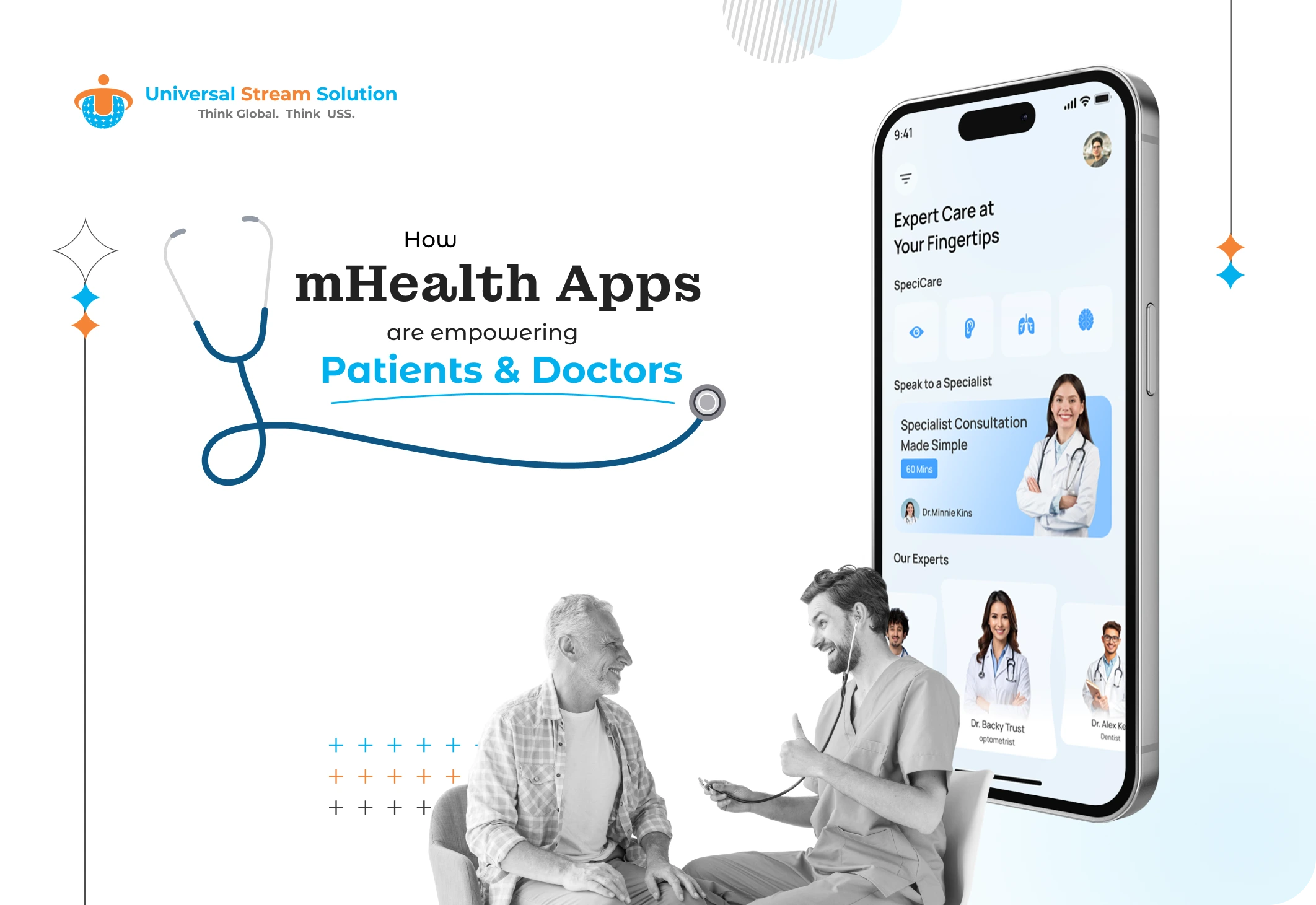
How mHealth Apps Are Empowering Patients and Doctors Alike

 2nd December, 2025
 6 min read


Table Of Contents
- Why mHealth Is More Than Just a Trend
- What Patients Gain — Real Benefits in Everyday Life
- How Doctors & Healthcare Providers Benefit
- Why Healthcare Institutions Are Adopting mHealth Solutions
- Common Use Cases for mHealth Adoption
- What the Future Might Bring
- A Quick Word on Trust, Privacy, and Digital Ethics
- Final Thoughts: A New Era of Collaborative, Accessible Healthcare
1. Why mHealth Is More Than Just a Trend
Think about how much of your daily life is on your phone: messages, banking, shopping, reminders, maps. Now imagine if your health care could plug into that same ecosystem. That’s what’s happening now.
Smartphones, wearables, and secure cloud‑based systems are giving ordinary people access to ongoing health information. That’s a big departure from the old model—when checking your lab results, scheduling a follow‑up, or refilling a prescription meant calling, traveling, sometimes waiting for days.
More than convenience, mHealth is about choice, clarity, and control. Patients no longer need to chase records or dig through paperwork. They don’t have to depend entirely on memory or rely on hand‑written notes. Digital health gives them a consistent, accessible place to manage their care.
2. What Patients Gain — Real Benefits in Everyday Life
Instant Access to Health Information
With mobile health tools, patients can view lab reports, medical records, and consultation summaries right on their phone. No more waiting for reports to be printed or for a folder to arrive from some distant clinic archive
This easy access means better continuity of care. Patients can check their health data before a follow-up, compare past results, and make sense of their progress. It’s especially helpful for those managing ongoing or chronic conditions over long periods.
Medication Management Made Simple
One of the biggest hurdles in treatment compliance is managing medication correctly—remembering doses, tracking refills, handling multiple prescriptions. That’s where digital prescription tools shine.
A well‑designed solution like a Digital Prescription App brings clarity and convenience. It helps patients keep track of prescribed medicines, sends reminders, stores past prescriptions, and can even flag possible conflicts.
For someone juggling daily medicines, this can cut down mistakes and make treatment feel a lot less intimidating.
Remote Consultations — Care Without Barriers
Not everyone lives near a hospital or clinic. For many people, especially in rural or remote regions, visiting a doctor can mean traveling long distances. Telemedicine features in mHealth apps change that.
Through video calls, secure chats, or message-based consultations, patients can get medical advice without leaving their home. That’s more inclusive, more accessible, and sometimes the difference between timely care and delayed treatment.
Proactive Monitoring and Health Awareness
Some apps allow tracking of vitals, symptoms, lifestyle habits, diet, and sleep. Over time, this helps users notice patterns—maybe stress affects their sleep, or blood pressure spikes after a certain meal.
This deeper awareness lets people make informed choices, catch red flags early, and help their doctors make more accurate assessments. Preventive care becomes easier when data isn’t lost, and health isn’t treated only when things go wrong.
3. How Doctors & Healthcare Providers Benefit
Cleaner Workflows, Less Paperwork
Doctors and clinics often grapple with stacks of files, manual record‑keeping, and repetitive administrative tasks. mHealth solutions streamline many of these tasks: digital records, online prescriptions, scheduling, follow-ups—all handled in one place.
The result is less time spent on clerical work and more focus on actual patient care. Clinics can operate more smoothly, avoid misfiling, and reduce manual errors.
Better Clinical Decisions Through Full Picture Data
Instead of relying on snapshots—one lab result here, one check‑up there—doctors can now see a more continuous picture of a patient’s health over time. Trends emerge: blood sugar fluctuations, blood pressure patterns, sleep quality, medication adherence.
Armed with that data, providers can make treatment plans that reflect real day-to-day life instead of isolated visits. It’s a more holistic, personalized approach.
Faster, Safer Communication
With secure, app-based patient‑doctor communication, sharing lab reports, prescribing medications, adjusting dosages, or clarifying symptoms becomes easier and safer. No risk of lost papers, no misread handwriting.
Patients get clarity, and doctors get confirmation. Everyone stays on the same page — quite literally.
Remote Monitoring & Timely Intervention
For patients needing ongoing care—say chronic illness sufferers or post‑surgery patients—remote monitoring is a boon. Apps can flag concerning vitals or alert doctors when patterns go off-track.
This early warning system can prevent complications, reduce unnecessary hospital visits, and sometimes save lives. It turns care from reactive to proactive.
4. Why Healthcare Institutions Are Adopting mHealth Solutions
Improved Patient Experience
Patients appreciate transparency and convenience. Online scheduling, instant lab access, prescription tracking—all add up to fewer hassles and more trust. Hospitals that adopt these features often see better patient satisfaction and loyalty.
Efficiency and Cost Reduction
Digital workflows reduce overhead—less paperwork, fewer errors, no lost files, less staff time wasted on manual tasks. Over time, that translates to cost savings and more efficient resource use.
In a world of increasing demand, limited staff, and rising costs, that kind of efficiency isn’t just nice to have — it’s essential.
Data‑Driven Hospital Management
With aggregated data (anonymized or with consent), hospitals can analyse patterns — common illnesses, peak patient load hours, treatment effectiveness. This helps in resource planning, staffing, and improving overall quality of care.
5. Common Use Cases for mHealth Adoption
- Chronic Disease Management: Apps help manage long-term conditions like diabetes, hypertension, heart disease with daily tracking and alerts.
- Teleconsultations: Patients can consult doctors remotely—ideal for rural patients, elderly, or those with mobility constraints.
- Prescription & Pharmacy Coordination: Digital prescriptions reduce confusion, help with dosage tracking, and streamline refills.
- Preventive Health & Wellness: Lifestyle tracking, reminders for check-ups or screenings, early detection of health issues.
- Post‑Discharge Monitoring: Patients recovering from procedures can share recovery data remotely, enabling follow-up without repeated hospital visits.
6. What the Future Might Bring
We’re only scratching the surface. In coming years, expect deeper integration between mHealth apps, wearable devices, AI‑driven analytics, and even predictive health alerts.
Picture an app that watches your daily patterns, flags deviations before symptoms show up, and messages you—or your doctor—to take preventive action. Or hospitals using aggregated health data (with consent) to design public wellness programs.
The possibilities are huge—and exciting.
7. A Quick Word on Trust, Privacy, and Digital Ethics
Of course, with all this convenience comes responsibility. Data privacy, secure communication, informed consent — these must stay top priorities.
Patients must trust that their sensitive health information is kept safe. Developers and healthcare providers must follow ethical guidelines. And transparency about what data is collected, how it’s used, and who can access it should remain clear.
Good digital health platforms balance innovation with integrity.
8. Final Thoughts: A New Era of Collaborative, Accessible Healthcare
mHealth apps are more than just digital tools. They are catalysts for change — helping patients stay connected, doctors offer better care, and hospitals run smoother.
They turn healthcare from something you only visit when sick, into something you manage every day — with clarity, connection, and confidence.
If you want a deeper look at how these ideas are being put into action right now, explore this Patient Experience Case . It shows how digital solutions can improve patient engagement, streamline care, and bring more humanity into modern healthcare.

Kinjal Vaghasiya

Kinjal Vaghasiya is a healthcare industry expert and digital transformation strategist with over nine years of experience in driving innovation, app development, and AI-powered healthcare solutions. She is passionate about using technology to enhance patient care and operational efficiency.
Related Blogs




 +91 9638225549
 sales@universalstreamsolution.com


