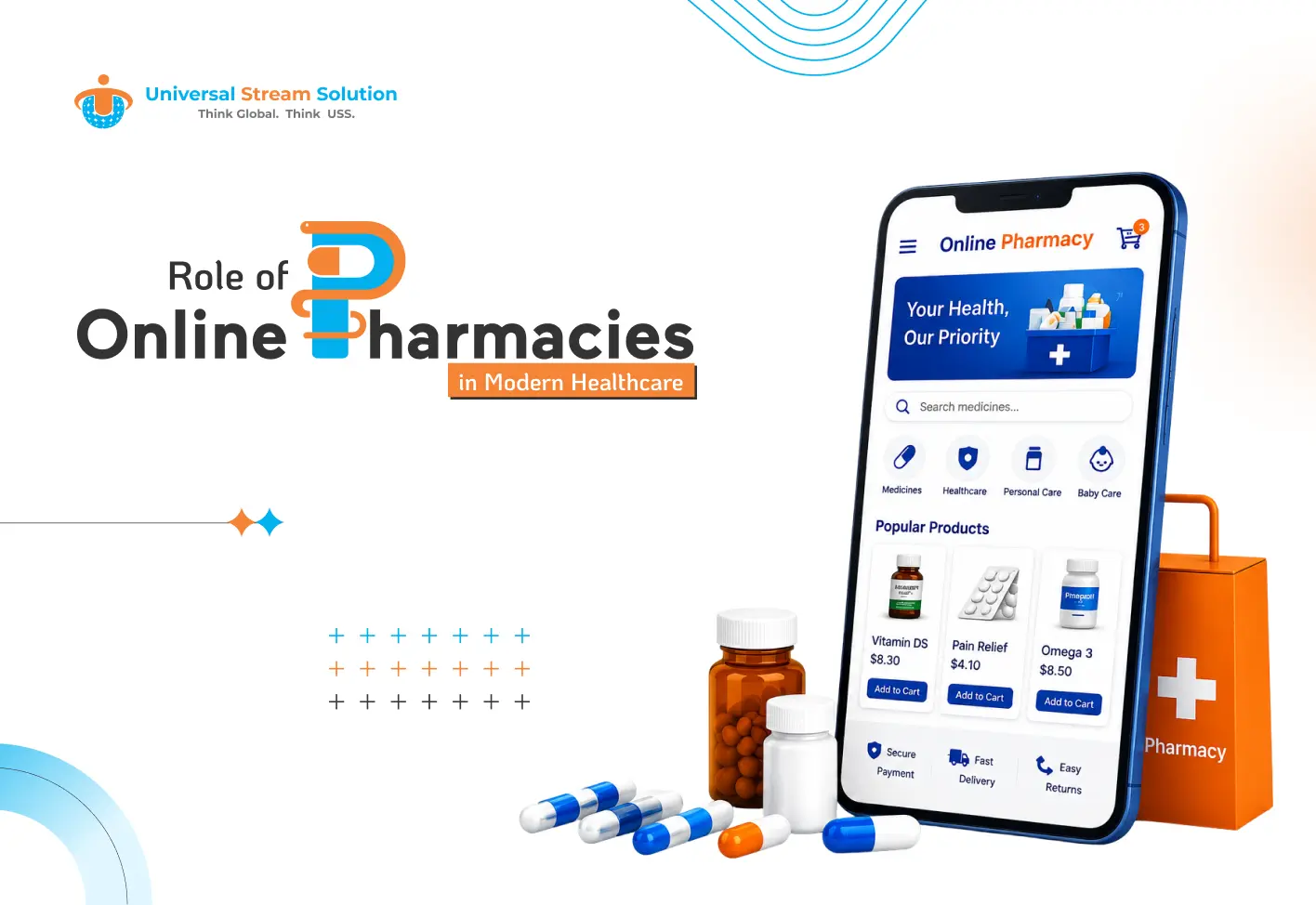
Role of Online Pharmacies in Modern Healthcare

 23rd July, 2026
 6 min read


Table Of Contents
- Introduction
- What Is an Online Pharmacy?
- Why Are Online Pharmacies Important in Modern Healthcare?
- Key Features of a Modern Online Pharmacy Platform
- Security and Compliance in Online Pharmacy Platforms
- Challenges of Online Pharmacies
- The Future of Online Pharmacies
- Conclusion
Introduction
The healthcare industry is changing rapidly as technology becomes a bigger part of how patients access medical services. From telemedicine and digital health records to mobile health apps and online consultations, digital solutions are making healthcare more accessible and convenient. One of the most important developments in this transformation is the rise of online pharmacies.
Online pharmacies allow patients to order prescribed and over-the-counter medicines through websites or mobile applications and have them delivered directly to their homes. This model offers a convenient alternative to visiting a traditional pharmacy, especially for people managing chronic conditions, elderly patients, individuals with limited mobility, and those living in areas with limited access to healthcare facilities.
However, the role of online pharmacies goes beyond simply delivering medicines. When properly designed and regulated, they can become an important part of the modern healthcare ecosystem by improving medication access, supporting medication management, reducing administrative work, and creating a more connected patient experience.
In this blog, we explore the role of online pharmacies in modern healthcare, their key benefits, important features, challenges, and how technology is shaping the future of digital pharmacy services.
1. What Is an Online Pharmacy?
An online pharmacy, also known as a digital pharmacy or internet pharmacy, is a platform that allows patients to purchase or refill medications through a website or mobile application.
Depending on local healthcare regulations, online pharmacies may offer services such as:
- Prescription medication ordering
- Over-the-counter medicine purchases
- Prescription uploads and verification
- Medication refills
- Home delivery
- Medication reminders
- Pharmacist consultations
- Digital prescription management
- Order tracking
- Insurance and payment processing
- Medication information and instructions
Some platforms operate as independent digital pharmacies, while others are connected to hospitals, healthcare providers, clinics, or traditional pharmacy networks.
The growing adoption of online pharmacy solutions is part of a broader shift toward digital healthcare, where patients can manage more aspects of their healthcare journey through connected digital platforms.
2. Why Are Online Pharmacies Important in Modern Healthcare?
Traditional pharmacies remain an essential part of healthcare, but patients increasingly expect more convenient and digitally connected services. Online pharmacies help address these expectations by making medication access easier and simplifying routine pharmacy processes.
For patients, the biggest advantage is convenience. Instead of traveling to a pharmacy, waiting in line, or making repeated visits for medication refills, eligible patients can manage their orders online.
For healthcare providers, digital pharmacy platforms can support better coordination between prescriptions, patients, and medication fulfillment.
For healthcare organizations, online pharmacy technology can improve operational efficiency and create a more connected digital healthcare ecosystem.
The importance of online pharmacies can be understood through several key areas.
Improving Access to Medications
One of the most significant roles of online pharmacies is improving access to medications.
Patients living in remote areas may have limited access to physical pharmacies. Similarly, elderly patients, people with disabilities, and individuals who have difficulty traveling may find it challenging to visit a pharmacy regularly.
Online pharmacy platforms can help address these challenges by enabling patients to order eligible medications from home.
This is particularly valuable for people who require regular medication for chronic conditions. Instead of making frequent trips to a physical pharmacy, patients may be able to schedule refills and receive their medications through home delivery.
By reducing geographical and mobility barriers, online pharmacies can contribute to a more accessible healthcare system.
Making Medication Ordering More Convenient
Convenience is one of the primary reasons patients use digital healthcare services.
With an online pharmacy, patients can browse available medications, upload prescriptions where permitted, place orders, select delivery options, and track their orders from a digital platform.
This can save time for both patients and caregivers.
As online pharmacies become more integrated with digital healthcare ecosystems, technologies such as AI in healthcare can further improve medication management, patient engagement, predictive analytics, and personalized healthcare services.
The convenience of online medication ordering can also make it easier for patients to maintain consistent access to their prescribed treatments.
Supporting Chronic Disease Management
Chronic diseases often require long-term medication management. Patients with conditions such as diabetes, hypertension, asthma, and cardiovascular diseases may need to take medications regularly for extended periods.
Online pharmacies can support these patients through features such as:
- Automatic refill reminders
- Prescription renewal notifications
- Medication schedules
- Order history
- Refill management
- Delivery tracking
- Digital medication records
These features can help patients stay organized and reduce the possibility of forgetting to reorder medications.
When combined with other digital healthcare solutions, online pharmacy platforms can become part of a broader chronic disease management ecosystem.
However, medication adherence depends on many factors, and digital reminders alone cannot replace medical advice or professional care.
Integrating Pharmacy Services With Digital Healthcare
Modern healthcare is becoming increasingly interconnected.
Patients may interact with multiple digital services, including telehealth platforms, electronic health records, patient portals, wearable devices, and healthcare applications.
Online pharmacies can play an important role by connecting pharmacy services with these digital healthcare systems.
For example, a healthcare ecosystem may allow a patient to:
- Consult with a healthcare professional through telemedicine.
- Receive an electronic prescription.
- Send the prescription to an authorized pharmacy.
- Order the medication through an online pharmacy platform.
- Receive updates about the order.
- Get medication reminders and refill notifications.
This type of connected experience can reduce friction in the healthcare journey and make it easier for patients to manage their care.
Integration with EHR and EMR healthcare solutions, where appropriate and legally permitted, can also help healthcare organizations improve information flow between different parts of the care process.
Reducing the Burden on Physical Pharmacies
Online pharmacies can also help reduce pressure on traditional pharmacy locations by moving some routine processes to digital channels.
Simple activities such as prescription refills, order placement, payment, and delivery tracking can often be handled online.
This allows pharmacy staff to focus more on activities that require direct professional interaction, such as:
- Patient counseling
- Medication-related questions
- Clinical support
- Prescription verification
- Complex medication management
The goal is not necessarily to replace traditional pharmacies but to create a hybrid model where digital and physical pharmacy services work together.
Improving Medication Management
Medication management can become complicated, especially for patients taking multiple medications.
Online pharmacy platforms can provide tools that help patients organize their medication-related information.
Useful features may include:
- Medication lists
- Dosage instructions
- Refill reminders
- Prescription history
- Medication schedules
- Order history
- Drug information
- Pharmacist communication
For healthcare organizations developing a digital pharmacy platform, these features can improve the overall patient experience.
However, digital platforms must present medication information clearly and responsibly. Patients should always follow instructions provided by qualified healthcare professionals and consult their doctors or pharmacists when they have questions.
Enhancing Patient Convenience Through Home Delivery
Home delivery is one of the most recognizable features of online pharmacies.
For patients who cannot easily travel to a pharmacy, medication delivery can provide significant convenience.
It may be particularly useful for:
- Elderly patients
- Patients with mobility challenges
- People managing chronic conditions
- Caregivers
- Patients recovering at home
- People living far from pharmacies
Delivery tracking can also give patients greater visibility into their orders.
However, medication delivery requires strong operational processes. Healthcare organizations must consider prescription verification, packaging, storage requirements, delivery timelines, and regulatory requirements.
Certain medications may have special handling or delivery restrictions, so online pharmacy platforms must be designed around applicable laws and professional standards.
Improving the Digital Patient Experience
Patient experience has become an important part of modern healthcare.
A poorly designed pharmacy platform can create frustration, while a well-designed solution can make medication management simpler.
A modern online pharmacy platform should focus on:
- Easy navigation
- Simple prescription upload
- Clear medication information
- Secure login
- Multiple payment options
- Easy refill ordering
- Order tracking
- Mobile-friendly design
- Accessible customer support
The objective should be to reduce unnecessary complexity.
Patients should be able to find the information they need and complete common tasks without confusion.
A strong user experience is particularly important for healthcare platforms because users may include elderly patients, caregivers, and individuals who are not highly comfortable with technology.
Supporting Telehealth and Remote Care
The growth of telemedicine has created new opportunities for online pharmacies.
A patient may have a virtual consultation with a healthcare provider and receive a prescription without visiting a clinic in person. Depending on local regulations, that prescription may then be fulfilled through an authorized online pharmacy.
This creates a more connected digital healthcare journey.
Telehealth and online pharmacy integration can be especially useful for routine healthcare needs, prescription refills, and follow-up care when an in-person visit is not required.
However, healthcare providers must determine when remote care is appropriate and when patients require physical examinations or in-person medical attention.
Using Technology to Improve Pharmacy Operations
Technology plays a major role behind the scenes of online pharmacy platforms.
Modern solutions may include:
- Cloud-based infrastructure
- Artificial intelligence
- Data analytics
- Automated notifications
- Inventory management
- Electronic prescription processing
- Payment gateways
- Delivery management
- Customer relationship management
- Integration APIs
These technologies can help pharmacies manage large volumes of orders and improve operational visibility.
For example, inventory management systems can help organizations monitor medication availability, while analytics can provide insights into ordering patterns and customer behavior.
Automation can also reduce repetitive administrative tasks and help pharmacy teams manage workflows more efficiently.
3. Key Features of a Modern Online Pharmacy Platform
Organizations planning to build an online pharmacy solution should consider both patient-facing and administrative features.
Patient Features
A user-friendly platform may include:
- Patient registration and secure login
- Medication search
- Prescription upload
- Prescription verification
- Medication refill requests
- Shopping cart
- Secure payments
- Order tracking
- Delivery scheduling
- Medication reminders
- Digital receipts
- Order history
- Pharmacist communication
Pharmacy Management Features
The administrative side may include:
- Prescription management
- Inventory management
- Order management
- Customer management
- Delivery management
- Payment management
- Reporting and analytics
- Staff management
- Notifications
- Integration with healthcare systems
The exact functionality depends on the pharmacy's business model, target users, location, and regulatory environment.
4. Security and Compliance in Online Pharmacy Platforms
Healthcare data is highly sensitive, making security a critical consideration for online pharmacy platforms.
Organizations must protect patient information and ensure that digital systems follow applicable healthcare privacy, security, and pharmacy regulations.
Important considerations may include:
- Data encryption
- Secure authentication
- Role-based access control
- Audit logs
- Secure payment processing
- Data privacy controls
- Regular security testing
- Secure API integrations
- Backup and disaster recovery
Organizations operating in different countries may be subject to different laws and regulations. For example, healthcare businesses in the United States may need to consider HIPAA requirements when applicable, while organizations in other regions must follow their respective healthcare and data protection frameworks.
Compliance should be considered from the beginning of platform planning rather than added as an afterthought.
5. Challenges of Online Pharmacies
Despite their benefits, online pharmacies also face several challenges.
Regulatory Compliance
Pharmacy regulations vary by country and region. Online pharmacy operators must ensure that their services comply with prescription, licensing, dispensing, and delivery requirements.
Medication Safety
Patients must receive the correct medication and appropriate instructions. Prescription verification and professional oversight are critical components of a responsible online pharmacy system.
Data Security
Online pharmacy platforms handle sensitive personal and healthcare information. Strong cybersecurity practices are essential to reduce privacy and security risks.
Counterfeit or Unsafe Medicines
Unauthorized online sellers can create serious risks for patients. Consumers should use legitimate, licensed pharmacies and follow local healthcare guidance when purchasing medicines online.
Technology Accessibility
Not every patient has the same level of digital literacy or access to technology. Online pharmacy services should therefore be designed with accessibility and ease of use in mind.
6. The Future of Online Pharmacies
The future of online pharmacies is likely to be shaped by continued advancements in digital healthcare technology.
Artificial intelligence may support areas such as customer service, demand forecasting, and operational automation. Data analytics can help organizations understand pharmacy operations and improve inventory planning.
Mobile applications may also become increasingly important as patients manage healthcare services through smartphones.
Integration between online pharmacies, telemedicine, electronic health records, patient portals, and healthcare providers may create more connected digital healthcare experiences.
At the same time, the growth of online pharmacy services will require continued attention to patient safety, cybersecurity, privacy, and regulatory compliance.
The future is unlikely to be about choosing between physical and digital pharmacies. Instead, healthcare may increasingly adopt a hybrid model where patients can access the right service through the channel that best fits their needs.
Conclusion
Online pharmacies are becoming an important part of the modern healthcare ecosystem. By providing convenient access to medications, supporting prescription refills, enabling home delivery, and connecting pharmacy services with digital healthcare platforms, they can help create a more accessible and patient-centered healthcare experience.
However, successful online pharmacy solutions require more than an eCommerce-style website. They need secure technology, reliable prescription workflows, strong medication management capabilities, regulatory compliance, and a user experience designed around patient needs.
As healthcare continues to move toward digital-first experiences, online pharmacies will likely play an increasingly important role in connecting patients, healthcare providers, pharmacists, and medication services. Organizations looking to develop or enhance digital healthcare solutions can Talk to Healthcare IT Experts to explore the right technology and integration strategies.
For healthcare organizations, the opportunity lies in building digital pharmacy solutions that balance convenience, security, compliance, and patient safety. When these elements work together, online pharmacies can become a valuable component of a more connected and efficient healthcare system.

Kinjal Vaghasiya

Kinjal Vaghasiya is a healthcare industry expert and digital transformation strategist with over nine years of experience in driving innovation, app development, and AI-powered healthcare solutions. She is passionate about using technology to enhance patient care and operational efficiency.
Related Blogs





 +91 9638225549
 sales@universalstreamsolution.com


