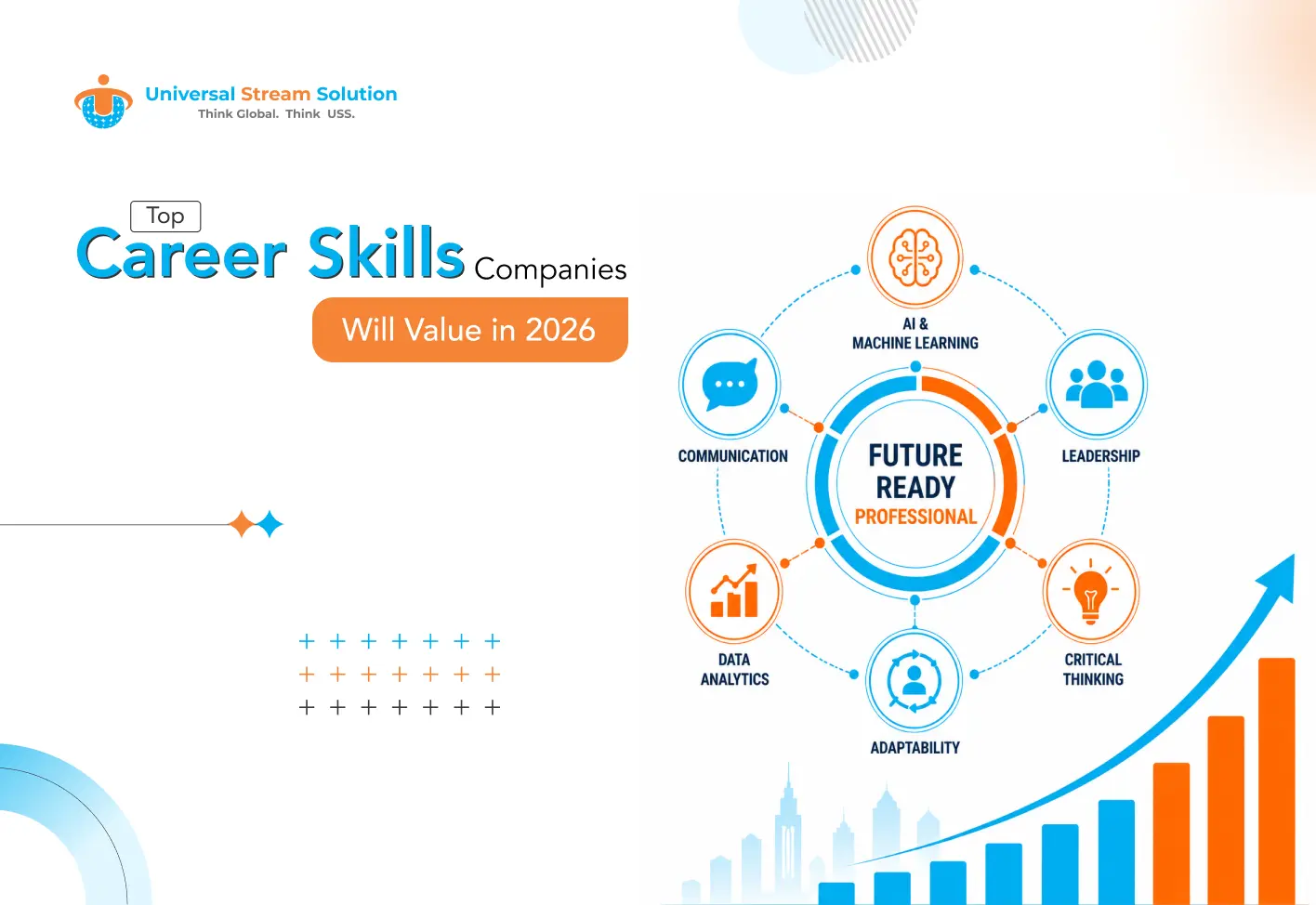
Top Career Skills Companies Will Value in 2026

 2nd July, 2026
 6 min read


Table Of Contents
- Introduction
- Why Skills Matter More Than Ever in 2026
- How to Build These Skills Before 2026
- Industries Hiring for These Skills
- The Technologies Driving the Digital Front Door
- The Future Belongs to Lifelong Learners
Introduction
The workplace is evolving faster than ever. Artificial intelligence, automation, hybrid work, digital transformation, and changing customer expectations are redefining what companies expect from employees. While technical expertise remains important, employers in 2026 are increasingly looking for professionals who combine digital knowledge with creativity, adaptability, and strong human skills.
The reality is simple: degrees may help you get noticed, but skills will determine your long-term success.
Whether you're a student, job seeker, working professional, freelancer, or business owner, understanding the top career skills companies will value in 2026 can help you stay competitive in an AI-driven job market.
In this guide, we'll explore the most in-demand workplace skills, why employers prioritize them, and practical ways to develop them.
1. Why Skills Matter More Than Ever in 2026
Over the last few years, businesses have rapidly adopted AI tools, cloud technologies, automation platforms, and data-driven decision-making. As routine tasks become automated, companies are shifting their hiring focus toward professionals who can solve complex problems, collaborate effectively, and work alongside AI instead of competing with it.
Organizations no longer ask:
"Can this person perform repetitive tasks?" Instead, they ask:
- Can they solve business problems?
- Can they adapt to new technology?
- Can they learn continuously?
- Can they communicate ideas clearly?
- Can they use AI responsibly?
The professionals who answer "yes" to these questions will become the most valuable employees in 2026.
a. AI Literacy
Artificial Intelligence is no longer limited to developers or data scientists.
Marketing teams use AI for content creation.
HR teams use AI for recruitment.
Finance departments automate reporting.
Customer service teams rely on AI assistants.
Sales professionals use AI-powered CRMs.
In 2026, almost every industry will expect employees to understand the basics of AI.
What AI Literacy Means
It doesn't mean building machine learning models.
Instead, it means understanding:
- How AI works
- When to use AI
- Prompt engineering basics
- AI limitations
- Ethical AI practices
- AI-assisted decision making
Popular AI Tools
- ChatGPT
- Microsoft Copilot
- Google Gemini
- Claude
- Perplexity AI
- Notion AI
- Grammarly AI
Why Companies Value It
Employees who know how to leverage AI can:
- Complete tasks faster
- Improve productivity
- Reduce manual work
- Generate ideas quickly
- Analyze information efficiently
b. Critical Thinking and Problem Solving
AI can provide information.
Humans provide judgment.
Companies increasingly need professionals who can evaluate situations, identify risks, and make informed decisions rather than simply following instructions.
Employers Look For
- Logical thinking
- Root cause analysis
- Data interpretation
- Decision making
- Strategic planning
Example
Instead of asking: "Why did website traffic decrease?" A critical thinker investigates:
Humans provide judgment.
Companies increasingly need professionals who can evaluate situations, identify risks, and make informed decisions rather than simply following instructions.
- Technical SEO issues
- Algorithm updates
- User behavior
- Competitor changes
- Content quality
Then develops a solution backed by evidence.
c. Digital Communication
Hybrid work has made communication one of the most valuable professional skills.
Employees now communicate through:
- Video meetings
- Slack
- Microsoft Teams
- Emails
- LinkedIn
- Project management tools
Clear communication prevents misunderstandings, improves collaboration, and builds trust.
Key Communication Skills
- Business writing
- Presentation skills
- Active listening
- Virtual meeting etiquette
- Professional email writing
- Cross-cultural communication
d. Adaptability and Continuous Learning
Technology changes every few months.
Job roles evolve constantly.
Companies prefer employees who enjoy learning rather than resisting change.
Examples
A digital marketer today should learn:
- AI SEO
- Generative Engine Optimization (GEO)
- Answer Engine Optimization (AEO)
- GA4
- Automation tools
A software developer may need to learn:
- AI-assisted coding
- Cloud technologies
- DevOps
- Cybersecurity basics
Learning never stops in 2026.
e. Data Literacy
Every business makes decisions using data.
You don't need to become a data scientist.
But you should know how to understand and interpret data.
Important Skills
- Reading dashboards
- Understanding KPIs
- Google Analytics
- Excel
- Power BI
- SQL basics
- Data visualization
Benefits
Data-literate employees:
- Make smarter decisions
- Improve marketing campaigns
- Identify customer trends
- Reduce business risks
f. Emotional Intelligence (EQ)
As AI handles technical tasks, emotional intelligence becomes even more valuable.
People still prefer working with professionals who understand emotions, build relationships, and resolve conflicts effectively. If you're developing these essential workplace skills and are ready to apply them in a collaborative environment, join our development team to work on innovative projects, grow alongside experienced professionals, and build a future-ready career.
Emotional Intelligence Includes
- Empathy
- Self-awareness
- Relationship management
- Conflict resolution
- Leadership
- Collaboration
High EQ creates stronger teams and better workplace culture.
g. Creativity
AI generates content.
Humans generate original ideas.
Creativity will remain one of the most valuable workplace skills because innovation drives business growth.
Creativity Includes
- Brainstorming
- Product innovation
- Marketing campaigns
- Storytelling
- Design thinking
- Business strategy
Companies need employees who can imagine solutions beyond AI-generated suggestions.
h. Cybersecurity Awareness
Cyber threats continue to grow every year.
Every employee—not just IT teams—plays a role in protecting company data.
Basic Cybersecurity Skills
- Strong passwords
- Multi-factor authentication
- Recognizing phishing emails
- Secure file sharing
- Privacy awareness
- Safe remote working
One careless click can cost a company millions.
i. Project Management
Companies increasingly hire professionals who can organize work efficiently.
Project management isn't limited to managers anymore.
Even individual contributors benefit from planning, prioritization, and execution skills.
Popular Project Management Tools
- Trello
- Asana
- Jira
- ClickUp
- Monday.com
- Notion
Valuable Skills
- Time management
- Resource planning
- Goal setting
- Team coordination
- Risk management
j. AI + Human Collaboration
Rather than replacing employees, AI is becoming a workplace partner.
Successful professionals know when to rely on AI—and when human judgment is essential.
Examples include:
- AI drafts content; humans refine the message.
- AI analyzes trends; humans make strategic decisions.
- AI writes code; developers review and optimize it.
- AI summarizes meetings; teams decide next steps.
Companies value professionals who use AI responsibly while maintaining quality, ethics, and creativity.
k. Leadership Without a Title
Leadership is no longer reserved for managers.
Companies value employees who:
- Take ownership
- Mentor teammates
- Solve problems proactively
- Support collaboration
- Communicate clearly
These qualities often lead to faster career growth.
l. Customer-Centric Thinking
Regardless of your role, understanding customer needs is increasingly important.
Whether you're in: Companies value employees who:
- Marketing
- Sales
- Software development
- Customer support
- Product management
- HR
Thinking from the customer's perspective improves business outcomes.
Ask yourself:
- Does this solve a real problem?
- Is it easy to use?
- Does it create value?
Customer-focused employees contribute directly to business success.
m. Personal Branding
Recruiters increasingly search LinkedIn before scheduling interviews.
A strong personal brand can significantly improve career opportunities.
Build Your Personal Brand By
- Sharing industry insights
- Publishing articles
- Networking consistently
- Showcasing achievements
- Building an online portfolio
- Engaging with professionals
Your online presence often becomes your digital resume.
n. Technical Skills That Complement Every Career
While soft skills are essential, employers also expect professionals to understand relevant technologies.
Popular technical skills include:
- Cloud computing
- SEO
- Digital marketing
- Automation
- CRM platforms
- No-code tools
- API basics
- Prompt engineering
- Business intelligence
- Workflow automation
Learning one new technical skill every year can significantly improve career prospects.
o. Time Management and Productivity
Modern workplaces involve multiple projects, meetings, and deadlines.
Professionals who manage their time effectively consistently outperform others.
Best Practices
- Prioritize high-impact work
- Reduce unnecessary meetings
- Automate repetitive tasks
- Use productivity apps
- Plan daily goals
- Avoid multitasking
Working smarter—not longer—is becoming the new productivity standard.
2. How to Build These Skills Before 2026
Developing future-ready skills doesn't require returning to university. A structured learning plan and consistent practice can make a significant difference.
Here are practical steps:
Learn Online
Use trusted learning platforms to build technical and professional skills.
Learn Online
Use trusted learning platforms to build technical and professional skills.
Practice With Real Projects
Apply your knowledge by creating portfolios, contributing to open-source projects, writing blogs, or volunteering.
Use AI Daily
Experiment with AI tools to automate repetitive work, generate ideas, summarize documents, and improve workflows.
Read Industry News
Stay informed about trends in your field through blogs, newsletters, podcasts, and webinars.
Build Your Network
Connect with professionals, attend virtual events, and participate in online communities to exchange ideas and discover new opportunities.
Request Feedback
Regular feedback from managers, mentors, and peers helps identify strengths and areas for improvement.
3. Industries Hiring for These Skills
These future-focused skills are valuable across industries, including:
- Information Technology
- Artificial Intelligence
- Software Development
- Healthcare
- FinTech
- E-commerce
- Manufacturing
- Education
- Digital Marketing
- SaaS
- Consulting
- Logistics
- Human Resources
- Media and Entertainment
No matter your field, combining technical expertise with adaptability and strong interpersonal skills will help you develop industry expert skills that make you a more competitive candidate in today's evolving job market.
4. The Technologies Driving the Digital Front Door
As workplaces evolve, avoid these career-limiting habits:
- Relying only on traditional degrees without updating your skills.
- Ignoring AI tools because they seem complex or unfamiliar.
- Focusing exclusively on technical skills while neglecting communication and collaboration.
- Resisting organizational or technological change.
- Waiting for employers to provide all learning opportunities.
- Overlooking the importance of networking and personal branding.
- Treating learning as a one-time event instead of an ongoing process.
Professionals who embrace lifelong learning are more likely to thrive in a rapidly changing job market.
The Future Belongs to Lifelong Learners
The workplace of 2026 will reward professionals who combine technology with human strengths. While AI and automation will continue to reshape industries, qualities like creativity, empathy, strategic thinking, and adaptability will remain uniquely valuable.
Success is no longer about mastering a single skill and relying on it for decades. It's about continuously learning, embracing new technologies, and staying curious. Professionals who invest in AI literacy, data skills, communication, leadership, and continuous improvement will be well-positioned for long-term career growth.
Instead of asking, "Will AI replace my job?", the better question is, "How can I use AI and future-ready skills to become more valuable?" Those who answer that question with action will be the professionals companies are eager to hire in 2026 and beyond.

Kinjal Vaghasiya

Kinjal Vaghasiya is a healthcare industry expert and digital transformation strategist with over nine years of experience in driving innovation, app development, and AI-powered healthcare solutions. She is passionate about using technology to enhance patient care and operational efficiency.
Related Blogs




 +91 9638225549
 sales@universalstreamsolution.com


