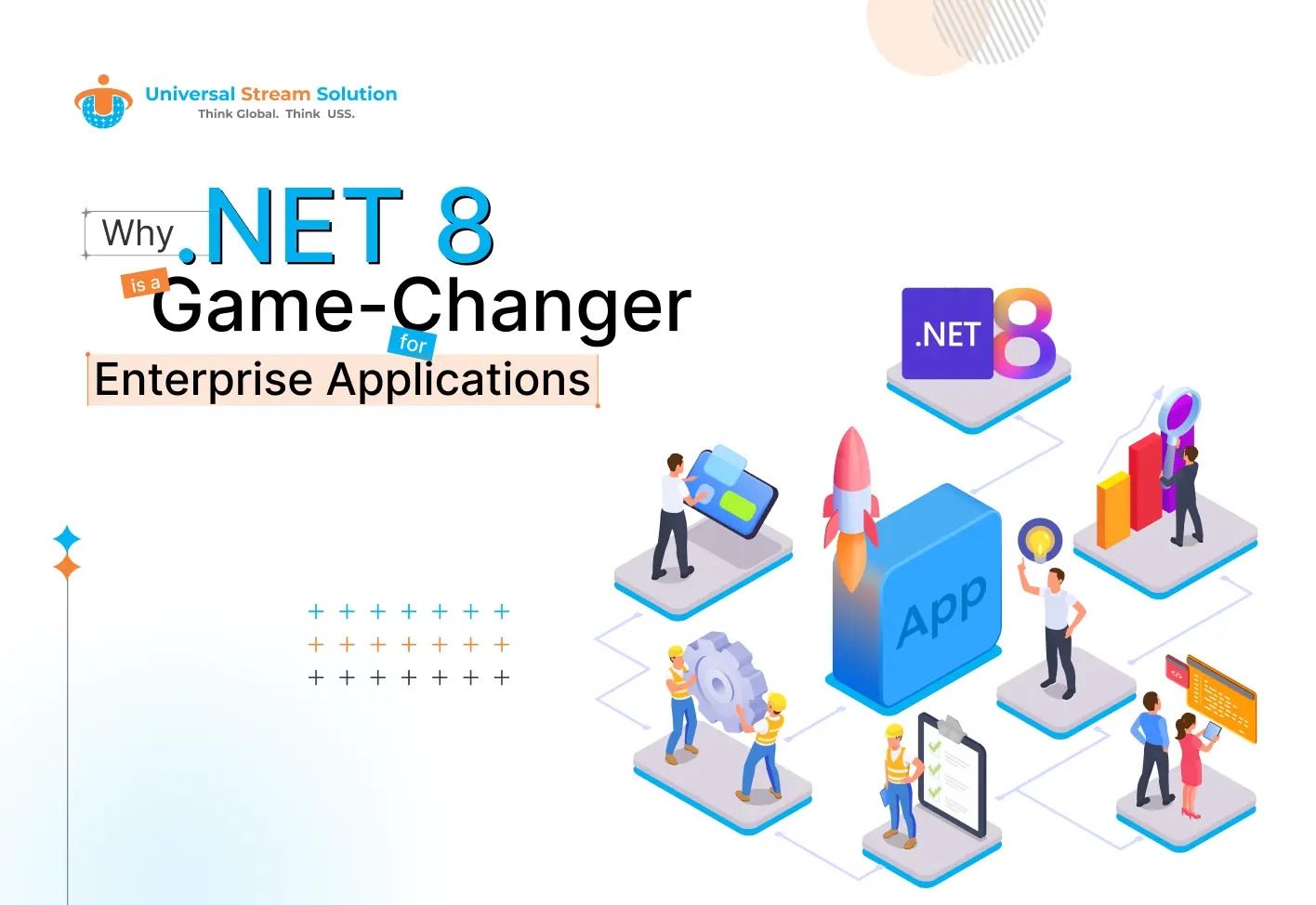
Why .NET 8 Is a Game-Changer for Enterprise Applications

 28th May, 2026
 6 min read


Table Of Contents
- Introduction
- What Is .NET 8?
- Major Reasons Why .NET 8 Is a Game-Changer for Enterprise Applications
- Industries Benefiting from .NET 8 Enterprise Applications
- Why Businesses Should Upgrade to .NET 8
- Challenges Enterprises Should Consider
- Future of Enterprise Development with .NET 8
- Final Thoughts
Introduction
Modern enterprises are under constant pressure to deliver scalable, secure, and high-performing digital solutions faster than ever before. Businesses today need software platforms that support cloud-native development, microservices architecture, AI integration, cross-platform compatibility, and enterprise-grade security — all while reducing operational costs and development complexity.
This is where NET 8 becomes a major breakthrough for enterprise software development.
Released as a Long-Term Support (LTS) version by Microsoft, .NET 8 introduces substantial improvements in performance, cloud optimization, developer productivity, native AI capabilities, and application modernization. It is not just another framework upgrade; it represents a significant shift in how enterprises can build future-ready digital ecosystems.
In this article, we will explore why .NET 8 is becoming the preferred framework for modern enterprise applications and how organizations can leverage its capabilities to stay competitive in the rapidly evolving digital landscape.
1. What Is .NET 8?
NET 8 is the latest version of Microsoft’s open-source development platform used for building web applications, APIs, cloud services, desktop applications, mobile apps, IoT systems, and enterprise software solutions.
As an LTS release, .NET 8 receives long-term support, security updates, and stability improvements, making it ideal for enterprise-grade production environments.
It supports:
- Cloud-native application development
- Cross-platform deployment
- Microservices architecture
- AI-powered enterprise solutions
- High-performance APIs
- Containerized applications
- Scalable backend systems
- Real-time enterprise applications
For organizations planning digital transformation initiatives, .NET 8 offers a future-proof technology stack that aligns with modern business needs.
2. Major Reasons Why .NET 8 Is a Game-Changer for Enterprise Applications
Exceptional Performance Improvements
Performance is one of the most important factors in enterprise application development. Large-scale business systems process millions of requests, transactions, and data operations every day.
.NET 8 delivers significant runtime and memory optimizations compared to previous versions.
Key Performance Enhancements
- Faster API response times
- Reduced memory consumption
- Improved garbage collection
- Optimized Just-In-Time (JIT) compilation
- Better startup performance
- Enhanced container efficiency
These upgrades allow enterprises to build applications that can handle heavy workloads with improved reliability and lower infrastructure costs.
Why This Matters for Enterprises
Faster applications directly improve:
- User experience
- System scalability
- Operational efficiency
- Customer satisfaction
- Cloud cost optimization
For industries like fintech, healthcare, logistics, SaaS, and eCommerce, these performance improvements can significantly impact business outcomes.
Cloud-Native Development Capabilities
Cloud computing is now the backbone of enterprise IT infrastructure. Organizations are increasingly migrating workloads to platforms like Microsoft Azure, Amazon Web Services, and Google Cloud to support scalable and secure cloud-based backend development for modern enterprise applications.
.NET 8 is designed specifically for cloud-native application development.
Cloud Features in .NET 8
- Native container support
- Kubernetes optimization
- Microservices architecture support
- Simplified cloud deployment
- Improved observability and monitoring
- Built-in resiliency tools
- Distributed application support
The introduction of .NET Aspire also simplifies the development of distributed enterprise applications by improving orchestration, service discovery, logging, and monitoring.
WEnterprise Benefits
Businesses can:
- Scale applications faster
- Improve deployment efficiency
- Reduce infrastructure complexity
- Increase application reliability
- Accelerate DevOps workflows
This makes .NET 8 highly suitable for modern enterprise ecosystems that rely on cloud infrastructure and distributed systems.
Long-Term Support (LTS) Stability
Enterprises require stability and long-term maintainability for mission-critical systems.
As an LTS release, NET 8 provides:
- Long-term security updates
- Extended Microsoft support
- Stable enterprise deployment
- Reduced migration frequency
- Better compliance management
This is especially important for industries with strict regulatory requirements such as:
- Banking
- Insurance
- Healthcare
- Government
- Enterprise SaaS
- Manufacturing
Organizations can confidently build large-scale applications without worrying about short-term framework deprecation.
Improved Developer Productivity
Development speed is crucial in today’s competitive market.
.NET 8 introduces several features that improve developer experience and productivity.
Productivity Enhancements
- Simplified coding patterns
- Better diagnostics tools
- Faster build times
- Improved debugging
- Advanced Hot Reload functionality
- Enhanced minimal APIs
- Cleaner architecture support
These improvements help development teams:
- Reduce development time
- Minimize bugs
- Accelerate feature delivery
- Improve collaboration
- Increase software quality
For enterprises managing multiple software projects simultaneously, these productivity gains can create substantial operational advantages while improving the efficiency and scalability of modern custom software systems.
Native AI Integration Support
Artificial Intelligence is becoming a major component of enterprise software solutions.
.NET 8 provides better support for AI-powered applications through integrations with:
- Machine learning frameworks
- AI APIs
- Intelligent automation tools
- Cloud AI services
This allows enterprises to build:
- AI chatbots
- Recommendation engines
- Predictive analytics systems
- Intelligent automation platforms
- Smart business applications
With AI rapidly transforming industries, .NET 8 positions enterprises for next-generation innovation.
Better Microservices Architecture Support
Modern enterprise systems increasingly use microservices architecture for scalability and flexibility.
.NET 8 significantly improves microservices development with:
- Lightweight APIs
- Improved containerization
- Better orchestration support
- Distributed tracing
- Enhanced service communication
- Cloud-native tooling
Why Enterprises Prefer Microservices
Microservices enable businesses to:
- Scale individual services independently
- Improve deployment flexibility
- Reduce downtime risks
- Accelerate development cycles
- Improve fault isolation
.NET 8 makes building and managing microservices much easier compared to previous framework versions.
Enhanced Security Features
Cybersecurity remains one of the biggest concerns for enterprises.
.NET 8 strengthens application security through:
- Improved authentication mechanisms
- Better authorization controls
- Enhanced encryption support
- Secure API development
- Identity management improvements
- Security patching via LTS support
Enterprise Security Advantages
Organizations can better protect:
- Customer data
- Financial transactions
- Enterprise systems
- Internal APIs
- Cloud workloads
For regulated industries, these security enhancements help support compliance and risk management initiatives.
Cross-Platform Enterprise Development
Today’s enterprise applications often need to run across multiple operating systems and environments to support scalable and flexible enterprise digital solutions for modern businesses.
.NET 8 provides strong cross-platform compatibility for:
- Windows
- Linux
- macOS
- Cloud environments
- Containers
- Mobile platforms
This allows enterprises to develop applications once and deploy them across diverse infrastructures.
Business Advantages
- Reduced development costs
- Easier maintenance
- Greater deployment flexibility
- Faster scalability
- Improved infrastructure compatibility
Cross-platform capabilities are especially valuable for organizations operating hybrid IT environments.
Modern API Development
APIs are at the core of enterprise digital ecosystems.
.NET 8 introduces major improvements in API development through:
- Minimal APIs
- Faster request handling
- Better OpenAPI support
- Improved serialization
- Native HTTP optimizations
Enterprise Use Cases
- SaaS platforms
- Mobile backends
- Third-party integrations
- ERP systems
- CRM platforms
- Payment gateways
Modern API development in .NET 8 helps enterprises create highly scalable digital platforms.
Cost Optimization for Enterprises
Technology decisions are heavily influenced by operational costs.
.NET 8 helps reduce costs through:
- Lower cloud resource consumption
- Improved application efficiency
- Faster development cycles
- Reduced maintenance overhead
- Better scalability
- Open-source ecosystem advantages
Financial Impact
Enterprises can achieve:
- Lower hosting expenses
- Reduced infrastructure requirements
- Faster time-to-market
- Improved ROI on software investments
This makes .NET 8 attractive for both startups and large enterprises seeking sustainable digital growth.
3. Industries Benefiting from .NET 8 Enterprise Applications
Several industries are rapidly adopting NET 8 for digital transformation initiatives.
Healthcare
Healthcare organizations use .NET 8 for:
- Patient management systems
- Telemedicine platforms
- Healthcare analytics
- Secure medical applications
Fintech
Financial companies leverage .NET 8 for:
- Banking platforms
- Payment systems
- Fraud detection
- Trading applications
eCommerce
Retail businesses build:
- High-performance online stores
- Inventory systems
- Recommendation engines
- Omnichannel commerce platforms
Logistics & Supply Chain
Logistics enterprises use .NET 8 for:
- Fleet management
- Real-time tracking
- Warehouse automation
- ERP integration
Enterprise SaaS
SaaS providers benefit from:
- Multi-tenant architecture
- Scalable APIs
- Cloud-native infrastructure
- Subscription management systems
4. Why Businesses Should Upgrade to .NET 8
Organizations still using older frameworks may face:
- Performance limitations
- Security vulnerabilities
- Higher infrastructure costs
- Compatibility issues
- Maintenance challenges
Migrating to .NET 8 offers:
- Future-ready architecture
- Better scalability
- Enhanced cloud compatibility
- Modern security standards
- Improved developer efficiency
Businesses planning long-term digital strategies should strongly consider adopting .NET 8 as part of their modernization roadmap.
5. Challenges Enterprises Should Consider
Although .NET 8 offers substantial advantages, enterprises should still plan migrations carefully.
Common Migration Considerations
- Legacy application compatibility
- Third-party library updates
- Infrastructure modernization
- Staff training
- DevOps adjustments
Working with experienced enterprise software development teams can help ensure smoother transitions and optimized implementation strategies.
6. Future of Enterprise Development with .NET 8
The future of enterprise software development is centered around:
Common Migration Considerations
- Cloud-native architecture
- AI-powered systems
- Microservices
- Scalable APIs
- Intelligent automation
- Cross-platform ecosystems
NET 8 aligns perfectly with these evolving technology trends.
As organizations continue investing in digital transformation, .NET 8 provides the flexibility, scalability, and performance required to support next-generation enterprise applications.
Final Thoughts
.NET 8 is more than just a framework upgrade — it is a strategic technology platform for modern enterprise software development.
Its combination of:
Common Migration Considerations
- High performance
- Cloud-native capabilities
- AI readiness
- Enterprise security
- Cross-platform support
- Long-term stability
- Cost efficiency
makes it one of the most powerful enterprise development frameworks available today.
Businesses looking to modernize legacy systems, improve scalability, accelerate digital transformation, and future-proof their technology infrastructure should seriously evaluate .NET 8 for their upcoming enterprise application initiatives.
As enterprise technology continues evolving rapidly, adopting modern frameworks like .NET 8 can provide organizations with a strong competitive advantage in the digital economy.

Bharat Katariya

Bharat Katariya is a seasoned executive at Universal Stream Solution LLC, bringing a strong track record of leadership and commercial strategy. With robust experience in driving business growth and operational transformation, he empowers organizations to build scalable, efficient solutions. Bharat is committed to delivering strategic value through innovation, collaboration, and integrity.
Related Blogs



 +91 9638225549
 sales@universalstreamsolution.com


